Are You Buying Posture Correctors Instead of Fixing Habits?
Key Takeaways
- Braces are Temporary Crutches: Posture correctors provide external mechanical support but fail to rehabilitate weak stabilizing muscles or correct vertebral subluxations.
- Passive Support Causes Disuse Atrophy: Studies show that wearing passive posture straps reduces muscle activation in the upper trapezius and rhomboids, accelerating muscle weakness over time.
- Root-Cause Alignment Requires Clinical Care: A structured clinical evaluation by a licensed chiropractor identifies biomechanical fixations, restores articular motion, and prescribes targeted exercise therapy.
- Local Habit Changes Drive Long-Term Results: Ergonomic adjustments prevent recurrent cervical and thoracic strain.
- Progressive Care Retrains Neuromuscular Pathways: Sustainable posture correction requires a structured series of treatments to remold dense connective tissue and retrain postural muscle firing patterns.
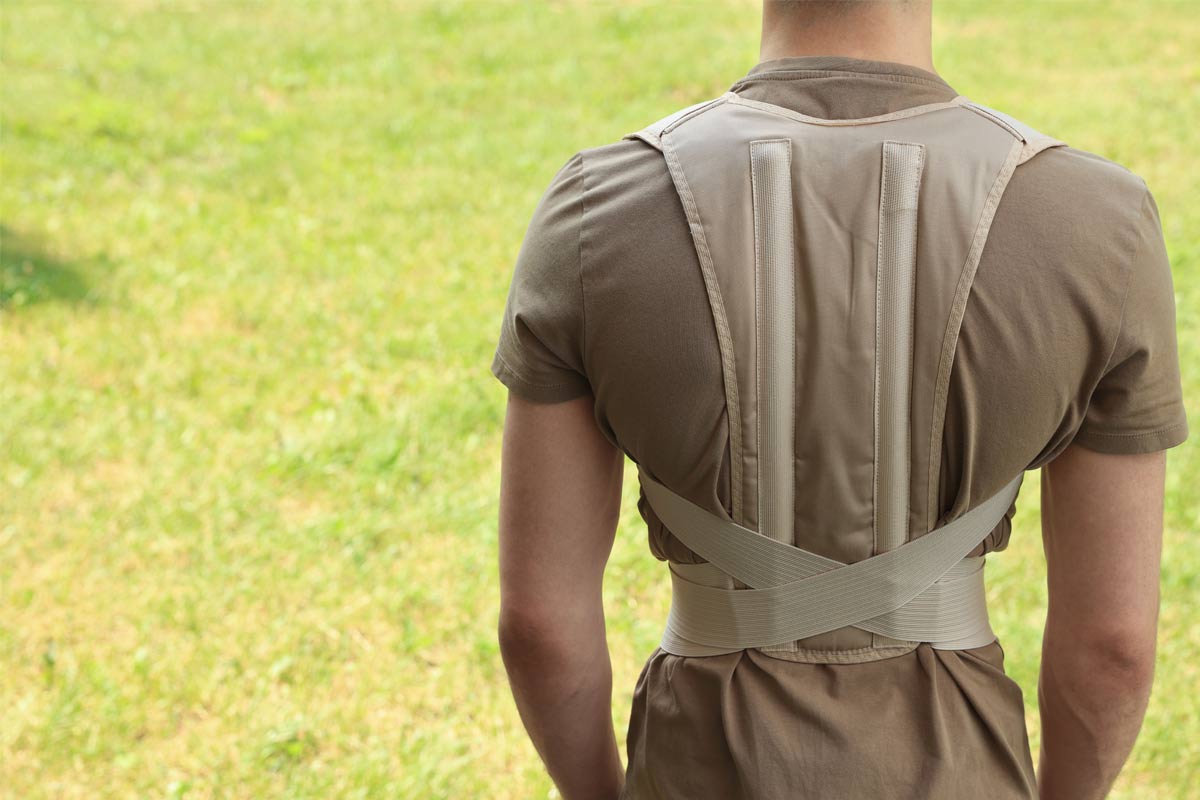
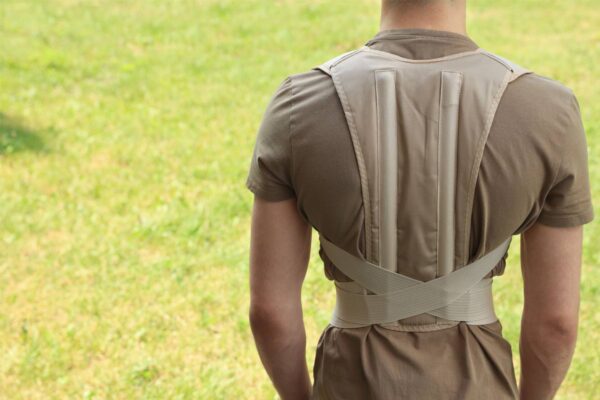
Wearable posture correctors provide passive mechanical tension to hold shoulders back, but they do not rehabilitate underlying structural misalignments or weak postural muscles. Sustained reliance on passive braces leads to electromyographic (EMG) muscle disuse and persistent spinal strain once the device is removed. Achieving long-term spinal health requires active habit modification, ergonomic adjustments, and targeted clinical care from a qualified chiropractor in Oshawa.
Why Should You See a Chiropractor in Oshawa for Posture Issues?
Direct Answer: Consulting a licensed chiropractor in Oshawa resolves root structural deficits by correcting vertebral subluxations, restoring restricted joint mobility, and strengthening weak postural muscles.
A professional posture evaluation distinguishes between articular joint fixations and functional muscular fatigue. Patients across Oshawa and neighboring communities benefit from localized treatment strategies designed around modern lifestyle stressors, such as long commutes and prolonged desk work.
| Assessment Parameter | Wearable Posture Corrector | Professional Chiropractic Care |
|---|
| Primary Mechanism | External mechanical force | Articular adjustment & neuro-muscular re-education |
| Impact on Core & Back Muscles | Decreases muscle activation (Risk of disuse atrophy) | Strengthens deep postural stabilizing muscles |
| Joint Mobility & Dynamics | Restricts natural spinal motion | Restores full range of motion to spinal segments |
| Long-Term Biomechanical Efficacy | Low (Symptoms recur upon brace removal) | High (Rehabs root structural & habit causes) |
Commuters spend hours in sustained forward-flexion postures. Over time, these positions trigger documented physiological shifts:
- Ligament Creep: Passive viscoelastic tissue lengthening under continuous strain, degrading spinal capsule stability (Journal of Bodywork & Movement Therapies).
- Upper Crossed Syndrome: Muscle imbalance characterized by hypertonicity in the pectoralis major and upper trapezius combined with weakness in the deep neck flexors, lower trapezius, and rhomboids.
- Spinal Subluxation: Vertebral joint restriction that limits range of motion, alters proprioceptive signaling, and elevates local muscular guarding.
Do Posture Correctors Work, or Do They Make Your Back Weaker?
Direct Answer: Posture correctors offer brief tactile biofeedback, but continuous use causes disuse muscle atrophy. By taking over the mechanical work of holding the spine upright, wearable straps deactivate key stabilizing muscles like the rhomboids and trapezius, ultimately worsening postural slouching.
Clinical consensus in sports and spinal rehabilitation confirms that lasting postural restoration requires active neuromuscular re-education rather than passive mechanical restraint.
The Passive Posture Brace Cycle
Wear Posture Corrector: External mechanical strap forces shoulders back into passive alignment.
- Postural Muscles Disengage: Rhomboids, lower trapezius, and core stabilizers stop firing (leading to disuse atrophy).
- Brace Removed: Underlying postural muscles are weaker than before brace application.
- Slouching Worsens: Patient experiences increased spinal fatigue, driving further dependency on passive support.
When evaluating wearable posture devices, patients should consider the following clinical guidelines:
- Short-Term Biofeedback: Flexible braces may serve as temporary tactile reminders during brief 15-to-20-minute sessions to build initial postural awareness.
- Lack of Articular Correction: Passive elastic straps cannot restore restricted spinal joint mechanics or correct thoracic spine fixations.
- Risk of Structural Dependency: Wearing a brace for multiple hours daily suppresses deep core muscle activation, increasing vulnerability to spinal strain upon removal.

What Daily Habits Are Silently Ruining Your Posture?
Direct Answer: Repetitive daily habits like unoptimized desk setups, slouched driving, and looking down at smartphones force the cervical spine into chronic forward flexion, multiplying mechanical head weight up to 60 pounds and degrading supportive spinal tissues.
Sedentary occupational routines and extended travel times across Durham Region contribute significantly to chronic spinal misalignments. Forward head posture, commonly known as “tech neck,” drastically increases the effective mechanical load on the cervical spine.
| Head Flexion Angle | Effective Cervical Spine Load (lbs) | Equivalent Real-World Load |
|---|
| 0° (Neutral Alignment) | 10–12 lbs | Average human head weight |
| 15° Forward Tilt | 27 lbs | Small bowling ball |
| 30° Forward Tilt | 40 lbs | Standard 4-year-old child |
| 45° Forward Tilt | 49 lbs | Large bag of concrete |
| 60° Forward Tilt (“Tech Neck”) | 60 lbs | Four-pack of adult bowling balls |
Primary daily habits contributing to progressive spinal degradation include:
- Unoptimized Workstations: Desktop monitors positioned below eye level at home offices or commercial spaces force continuous cervical flexion and thoracic slouching.
- Commuting Mechanics: Extended driving along Highway 401 or sitting on Durham Regional Transit buses with a tilted pelvis increases intradiscal pressure in the lumbar spine.
- Handheld Device Usage: Tilting the head down to view mobile screens at a 60-degree angle subjects cervical vertebrae to up to 60 pounds of constant force.
How Does Chiropractic Care Fix the Root Cause of Poor Posture?
Direct Answer: Chiropractic care corrects root postural deficits by delivering targeted manual spinal adjustments to mobilize restricted joints, utilizing myofascial release to open hypertonic anterior muscles, and prescribing tailored active exercises to strengthen deep postural stabilizers.
Consulting with a chiropractor in Oshawa includes detailed postural screening, spinal palpation, and range-of-motion testing to locate articular fixations. By combining manual adjustments with active therapeutic exercises, chiropractic intervention restores normal biomechanics and retrains neuromuscular control.
- Detailed Clinical Assessment: The clinician measures posture parameters, spinal curvatures, and joint mobility to pinpoint biomechanical deficits.
- Targeted Spinal Adjustments: High-velocity, low-amplitude (HVLA) thrusts or low-force instrument techniques restore movement to restricted vertebral joints.
- Soft Tissue Mobilization: Myofascial release therapies relieve hypertonic chest and upper neck muscles.
- Active Rehabilitation: Patients receive personalized stretches to open tight anterior structures and exercises to strengthen weak posterior muscles.
- Ergonomic Instruction: Customized workspace and lifestyle modifications prevent recurring postural strain.
Why Is One Chiropractic Session Not Enough to Fix Bad Posture?
Direct Answer: Postural degradation develops over years of static loading, altering ligament collagen structures and nervous system motor habits. A single adjustment restores immediate joint motion, but lasting structural change demands a progressive treatment series to remould connective tissue and retrain muscle memory.
| Rehabilitation Phase | Timeframe | Primary Clinical Objectives | Biomechanical Focus |
|---|
| Phase 1: Acute Relief & Mobility | Weeks 1–4 | Reduce joint restrictions and localized soft tissue inflammation | Restore basic articular range of motion |
| Phase 2: Corrective Rehabilitation | Weeks 5–8 | Remold elongated ligaments and strengthen weak postural stabilizers | Re-educate neuromuscular firing patterns |
| Phase 3: Functional Maintenance | Ongoing | Preserve optimal spinal mechanics amidst daily desk work and commuting | Prevent structural regression |
Cumulative care is essential because:
- Neuro-Muscular Memory Requires Time: Nervous system pathways controlling default posture require repeated reinforcement to establish new motor patterns.
- Ligament Remodeling is Gradual: Dense collagen structures around spinal joints adapt slowly to mechanical stress shifts over several weeks.
- Strengthening Demands Progressive Overload: Weak rhomboids and deep cervical flexors require progressive exercise load to build supportive endurance.
How Can You Start Improving Your Posture Today at Home?
Direct Answer: You can immediately reduce chronic spinal loading by enforcing 30-minute movement breaks, performing doorway chest stretches to counteract shoulder rounding, doing cervical chin tucks to relieve forward head posture, and aligning monitors to eye level.
Incorporating targeted micro-breaks and postural resetting exercises throughout the day helps counteract long periods of sitting. These active home practices complement professional clinical care by reinforcing proper alignment.
- The 30-Minute Movement Rule: Set a timer to stand, stretch, or walk for 60 seconds every 30 minutes to disrupt static spinal loading.
- Doorway Pectoral Stretch: Place forearms on a doorframe at 90-degree angles and step forward gently to open tight chest muscles; hold for 20 to 30 seconds.
- Chin Tucks (Cervical Retraction): Pull the head straight backward without tilting the chin down to strengthen deep neck flexors and reduce forward head posture.
- Monitor Height Calibration: Raise computer displays so the top third of the screen aligns directly with eye level.

Get Lasting Postural Health with PARC of Ontario
Stop relying on temporary braces that mask underlying structural issues. At PARC of Ontario, our chiropractor in Oshawa provides comprehensive posture evaluations, hands-on chiropractic adjustments, and active rehabilitation programs. We help resolve joint restrictions and strengthen weak postural muscles.
Schedule an evaluation at our Oshawa clinic now. Call us today at 905.579.9938 or visit parcofontario.com to book your assessment today.
Frequently Asked Questions
1.Can poor posture cause tension headaches or jaw pain?
Yes, sustained forward head posture puts excessive mechanical tension on the suboccipital muscles at the base of the skull, leading to cervicogenic and tension headaches. Furthermore, poor postural alignment alters temporomandibular joint (TMJ) mechanics, which often manifests as jaw tightness or clicking.
2. Is standing at a sit-stand desk enough to correct bad posture?
While sit-stand desks reduce prolonged sitting times, standing with poor form—such as locking the knees, leaning on one hip, or hunching over a low monitor—creates alternative spinal stresses. A standing desk must be combined with proper ergonomic height setup and active core engagement to protect your spine.
3. How does sleeping position affect daytime posture alignment?
Sleeping on an unsupportive mattress or using an overly thick pillow forces the cervical and thoracic spine into unnatural lateral bending or forward flexion for hours. A neutral sleeping alignment using an orthopedic cervical pillow helps preserve natural spinal curves overnight and supports daytime posture rehabilitation.
4. Can chiropractic adjustments help prevent age-related postural changes?
Regular chiropractic adjustments and spinal maintenance prevent premature spinal disc degeneration and joint stiffness that contribute to age-related hyperkyphosis (“dowager’s hump”). Maintaining full articular range of motion throughout adult life supports active muscle engagement and healthy postural balance.