Pain Management Tips for TMJ Disorder

Do you experience pain in your face, jaw, head, shoulders, or neck? Severe pain in these areas may be caused by a condition called temporomandibular joint disorder (TMJ). A disorder that affects the joints and muscles that enable the movement of the jaws, TMJ is most prevalent among younger individuals (aged 20 to 50), specifically among women.
Understanding the nature of the disorder, its signs and symptoms, and treatment and pain management techniques are critical for both patients and doctors.
Causes And Risk Factors
Located on both sides of the head, your temporomandibular joints are a series of muscles, joints, ligaments, and bones responsible for opening and closing your mouth. The right and left joints work together with the facial muscles, ligaments, and jaw bones to make it possible for you to speak, chew, and swallow.
This joint also controls the movement of the lower jaw, like moving forward, backward, and sideways. It consists of a ball, socket, and a disc that enables them to rotate, glide, and open. Any condition that prevents this system from working properly can lead to painful TMJ.
One common cause of TMJ is stress-induced muscle tension. People who are under extreme stress may develop bruxism (grinding or clenching your jaws at night), which may overwork the jaw muscles. TMJ can also stem from joint problems itself, including:
- A misshapen joint
- Diseases like osteoarthritis or rheumatoid arthritis
- Injury or damage to surrounding tissues
- Dislocation or shifting of the joint
- Repetitive habits (like gum chewing, nail-biting, and eating hard foods)
TMJ-related discomfort and pain can be relieved through non-surgical treatments and self-care. Surgery is only advised after conservative measures have not eased the symptoms of the disorder.
Symptoms of TMJ
The number one telltale sign that you may have TMJ is when you experience pain in your jaw, although pain associated with TMJ can be felt anywhere on your face, ears, eyes, neck, or forehead. Other signs and symptoms of TMJ dysfunction can include:
- Pain in one or both jaws, sometimes with difficulty chewing
- Pain in or around the ear
- General facial pain
- Difficulty opening or closing the mouth
- Grating sensation or clicking sound when you try to open your mouth
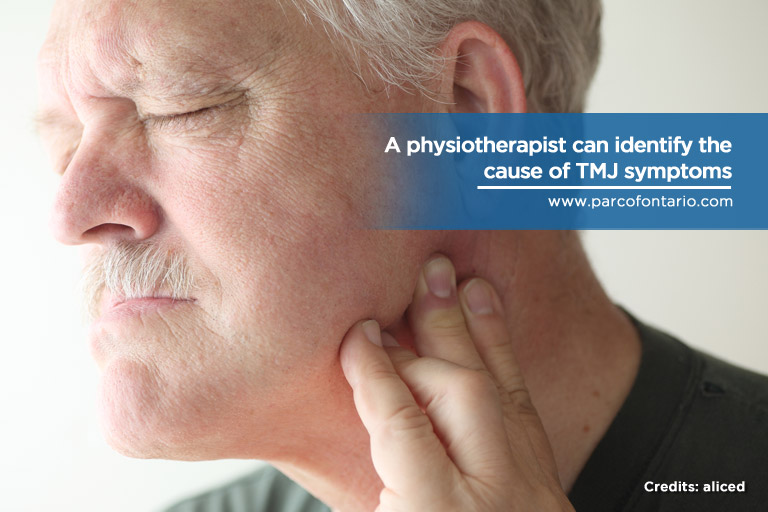
If you experience any of these symptoms, consult a physiotherapist right away. A professional physiotherapist can pinpoint the cause of the problem and design the proper treatment for you.
Managing Temporomandibular Joint Symptoms
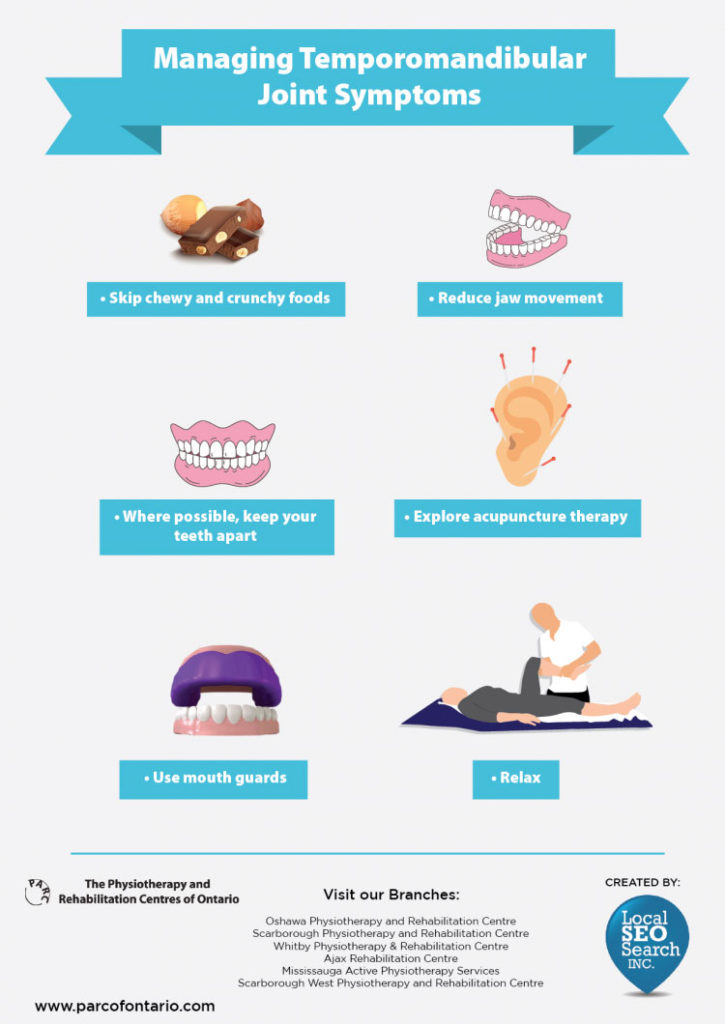
If you are experiencing the first signs of jaw joint disorder, these self-care tips may provide relief and healing when you’re at home:
- Skip chewy and crunchy foods – Eat soft foods like soup, mashed potatoes, yogurt, scrambled eggs, beans, and cooked fruits and vegetables. Cut your food into small portions to minimize chewing.

- Reduce jaw movement – Don’t chew gum, sing, or yell, as these actions may cause you to open your jaw wide.
- Where possible, keep your teeth apart – Maintaining a slight distance between your upper and lower teeth can ease the pressure on the jaw.
- Explore acupuncture therapy. Many acupuncturists are trained to deal with specific conditions like TMJ.
- Use mouth guards. Mouth guards can prevent grinding and can help keep the jaw in place.
- Relax. A physiotherapist can introduce you to stress-management strategies to release pent-up stress and help you relax your body.

Pain Relief Exercises
Exercises that stretch and relax the jaw can relieve pain, strengthen muscles, improve mobility, and facilitate healing. The Royal Surrey County Hospital and the American Academy of Family Physicians (AAFP) introduced the following exercises to ease the pain in your jaw joints while improving your jaw movement.
As with all exercise programs, you should first consult with a healthcare practitioner to know the right frequency for each exercise to reduce the risk of injury.
- Tongue Up – Place your tongue on the roof of your mouth. Repeatedly open and close your mouth slowly.
- Side-to-Side Jaw Movement – Place a ¼ inch object between your teeth and move your jaw from side to side slowly. Increase the thickness of the object between your teeth as it becomes easier.
- Forward Jaw Movement – Place a ¼ inch object between your front teeth. Gently move your bottom jaw forward so that your bottom teeth are in front of your top teeth. Like the previous exercise, increase the thickness of the object you placed between your teeth as it becomes easier.
- Chin Tucks – Sit with your chest up and your shoulders back. Create a “double chin” by pulling your chin in. Hold for three seconds and release. Repeat ten times.
- Relaxed Jaw Exercise – Rest your tongue against the roof of your mouth, behind your upper front teeth. Draw your teeth apart and relax your jaw muscles.
- Goldfish Exercise (Partial Opening) – Rest your tongue on the roof of your mouth, then place a finger in front of your ear on the joint. With your other hand, put one finger on your chin. Slowly drop your lower jaw halfway, then close it gently. You should notice a slight resistance, but not pain. Repeat six times, and then again for the other joint.
- Goldfish Exercise (Full Opening) – Start as with the partial opening exercise, but drop your lower jaw all the way down and then back. Repeat six times, and then again for the other joint.
- Resisted Mouth Opening – Place a thumb under your chin. Slowly open your mouth, pushing your thumb gently against your chin for resistance. Hold for three to six seconds, then close your mouth slowly.
- Resisted Mouth Closing – Squeeze your chin gently with the thumb and index finger of one hand. Apply gentle pressure on your chin while closing your mouth.
Consult a specialist for proper diagnosis and treatment
A nagging pain in the face, ears, jaws, or temples is likely a sign of a temporomandibular joint disorder. As you experience the symptoms, be sure to take extra care of yourself. It is highly crucial to consult a doctor to better understand your condition and receive proper advice on how to relieve your symptoms.
At Physiotherapy and Rehabilitation Centers (PARC) of Ontario, we specialize in assessing and treating TMJ. We have a team of specialists with the skills and knowledge to give you a proper assessment and treatment for your condition. Contact a location near you for evaluation and a plan for your pain.