How Does Acupuncture Compare with Massage Therapy for Pain Relief?
Pain affects people in different ways, and many look for natural options that ease discomfort without relying on strong medication. Acupuncture and massage therapy are two common choices because they support the body’s own ability to relax and recover. Each method works through a unique process, which can make one approach more suitable depending on the type of pain you have. Understanding how they differ helps you choose the option that fits your needs.
How Acupuncture Compares with Massage Therapy for Pain Relief
Many people consider these two methods when they want steady pain relief without harsh treatments. Both options can calm tension, lower stress, and support better movement. While they aim for similar results, they reach those results in very different ways.
Key Differences Between the Two Treatments
Both methods ease pain, but they work through very different approaches. These differences affect how your body reacts, how fast relief appears, and which issues each method targets best. Understanding these points helps you choose the option that matches your needs.
- Technique Used
Acupuncture uses thin needles on specific points to influence nerves. Massage therapy uses hands-on pressure, stretching, and slow movements to release tension in soft tissues.
- How Pain Relief Begins
Acupuncture supports the release of natural chemicals that calm pain signals. Massage therapy reduces discomfort by loosening tight muscles and improving flexibility.
- Type of Pain Each Addresses Best
Acupuncture often helps with nerve-related pain, migraines, and posture issues. Massage therapy works best for muscle knots, stiffness, and strain from physical activity.
- Speed of Relief
Massage therapy may provide quick comfort by easing tight muscles right away. Acupuncture builds results over several sessions, especially for long-term conditions.
- Overall Experience
Acupuncture offers a light, precise treatment with minimal pressure. Massage therapy feels more physical, using different pressures and movements to work through tension.
How Each Method Addresses Pain
Both methods aim to reduce discomfort, but they work through different processes inside the body. These differences affect how quickly relief appears and how each treatment supports long-term comfort. Knowing how they function helps you understand which one may suit your condition better.
- Acupuncture
Acupuncture affects nerve signals and encourages the body to release natural pain-calming chemicals. This can help ease sharp discomfort, reduce swelling, and support a steady improvement over time.
- Massage Therapy
Massage therapy targets muscles directly by using pressure, stretching, and movement. This helps soften knots, reduce stiffness, and improve flexibility for faster comfort.
Who Benefits Most from Each Treatment
Both methods support pain relief, but each one suits different types of discomfort and body needs. Understanding who responds best to each option helps you make a practical and informed choice. These points highlight the main differences in who may benefit more from acupuncture or massage therapy.
Best Fit for Acupuncture
- People with migraines or frequent headaches
- Individuals dealing with nerve-related pain or tingling
- Those with chronic neck issues linked to posture
- People who need a gentler approach that targets deeper internal triggers of pain
Best Fit for Massage Therapy
- People with muscle knots, tight shoulders, or stiff backs
- Individuals recovering from sports strain or physical overuse
- Those who feel better with hands-on pressure
- People whose pain improves when tight muscles are loosened directly
How Acupuncture Works
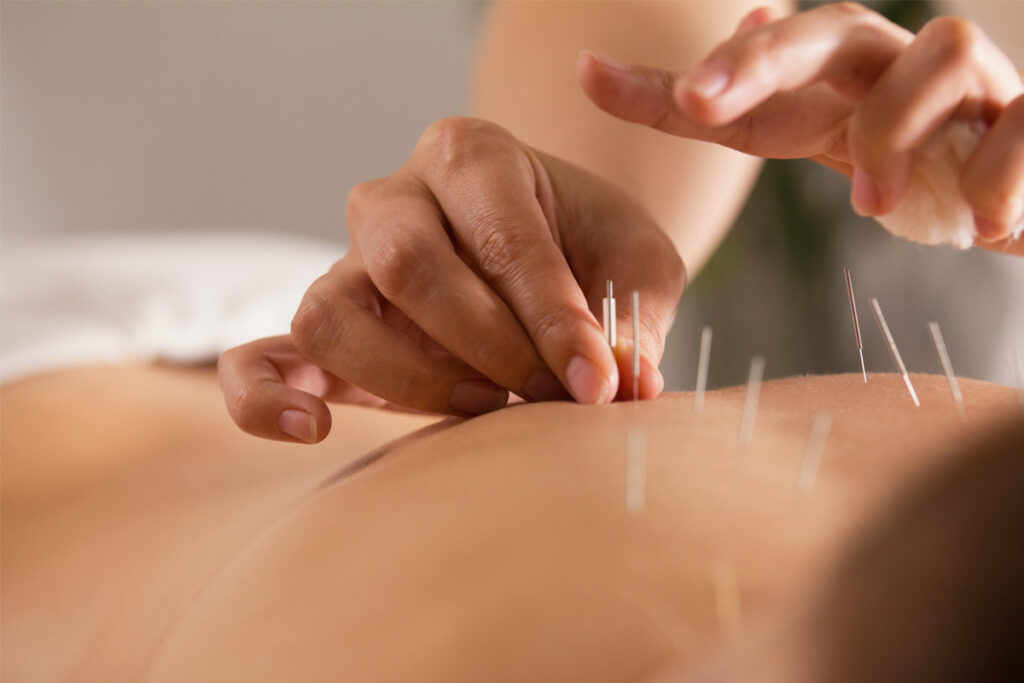
Acupuncture uses specific points on the body to influence pain signals and ease tension. These points help guide how the body reacts to discomfort and pressure. As the body responds, many people notice a gradual improvement in movement and comfort.
Mechanisms Behind Acupuncture’s Pain Relief
Acupuncture encourages the release of endorphins, which are the body’s natural pain-calming chemicals. This helps reduce soreness and create a sense of relief that grows over time. Better blood flow in tight areas also supports faster healing.
Common Pain Conditions Treated with Acupuncture
- Chronic back pain
- Neck pain linked to posture
- Headaches and migraines
- Joint stiffness and swelling
- Nerve-related pain or tingling
- Shoulder tension from overuse
- Knee pain from strain or imbalance
- Pelvic or hip discomfort
- Chronic tension from stress
- Pain linked to repetitive movements
What to Expect During an Acupuncture Session
An acupuncture session is calm and structured, helping you understand each step before treatment begins. These points show what usually happens so you feel prepared and comfortable.
- Initial Discussion: The practitioner asks about your pain, daily habits, and goals to understand your condition better.
- Placement of Thin Needles: Small, sterile needles are placed on specific points, creating sensations that may feel like light taps, warmth, or mild pressure.
- Relaxation Period: You rest for several minutes while the needles stay in place, allowing your body to respond gently to the treatment.
- Post-Session Effects: Many people feel calm and lighter afterward, and some begin noticing steady progress after a few sessions.
Potential Side Effects
Acupuncture is considered safe when performed by a trained professional, but some mild reactions may occur as your body adjusts. These points outline the most common effects so you know what to expect.
- Mild soreness
- Light bruising at needle sites
- Temporary fatigue or low energy
- Slight dizziness after the session
- Minor bleeding at a needle point
- Increased sensitivity in treated areas
How Massage Therapy Works
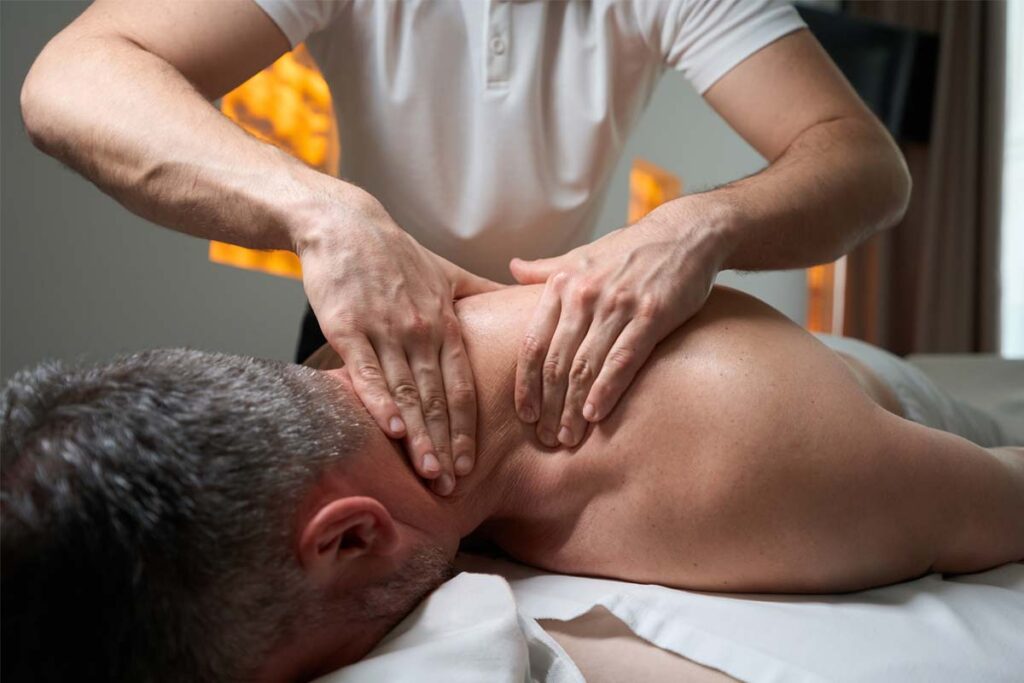
Massage therapy focuses on soft tissue and helps loosen tight areas that restrict movement. It can improve muscle recovery and reduce the pressure that builds from stress or daily tasks. Many people find it comforting because it eases both physical and mental tension.
Mechanisms Behind Massage Therapy’s Pain Relief
Massage therapy improves circulation by pressing and stretching tense areas, which p brings more oxygen to tired muscles. This added oxygen helps the tissues recover faster and reduces the stiffness that builds up from long hours of activity or stress.
The pressure used during the session also breaks down tight spots, allowing the muscles to move more freely. Over time, this combination supports steady relief and makes daily movement feel easier.
Common Pain Conditions Treated with Massage Therapy
Massage therapy can ease many types of muscle-related discomfort that affect daily movement and comfort. These points show the conditions it often helps with so you can see where it may fit your needs.
- Chronic muscle tightness in the back or shoulders
- Muscle knots caused by stress or poor posture
- Sports strain from overuse or intense activity
- Stiff neck and upper-back tension
- Lower-back discomfort from long hours of sitting
- Stress headaches linked to tight muscles
- Hip and glute tension from uneven movement or exercise
- Arm or wrist strain from repetitive tasks
- Leg soreness from heavy training or standing for long periods
- General stiffness after physical work or long daily routines
What to Expect During a Massage Therapy Session
A massage therapy session is calm and personalized, allowing the therapist to adjust the pressure and techniques based on your comfort. These points outline the usual flow so you know what happens from start to finish.
- Brief Discussion Before Starting
You share your pain points, pressure preference, and any areas that need special care.
- Use of Hands-On Techniques
The therapist applies strokes, kneading, and stretching to release tight muscles and improve movement.
- Adjustments During the Session
Pressure may be changed based on how your body responds, helping keep the experience comfortable.
- Relaxed Feeling Afterward
Many people notice lighter movement, less stiffness, and better flexibility once the session ends.
Safety and Possible Side Effects
Massage therapy is generally safe, but your body may respond in mild ways after treatment. Knowing the possible effects helps you prepare and adjust your sessions if needed.
- Mild soreness
- Temporary fatigue or tiredness
- Slight bruising in sensitive areas
- Increased muscle sensitivity for a short time
- Headache in rare cases from deep pressure
- Light dizziness immediately after a session
Cost, Frequency, and Treatment Planning
Planning treatment involves your budget, the type of pain you have, and how your body responds. Both methods may require repeated visits for strong results. Understanding these factors helps you choose a plan that is realistic and effective.
Typical Cost Range for Acupuncture vs. Massage Therapy
The cost of each treatment depends on the clinic, the practitioner’s experience, and how long each session lasts. Acupuncture often has a set rate for the first visit, with follow-up sessions priced slightly lower. Massage therapy usually follows an hourly rate, and the price may change depending on the techniques used or the level of pressure required.
Some clinics provide package options that make ongoing care more affordable over time. It also helps to check if your insurance plan includes coverage for either treatment, as this can reduce your out-of-pocket expenses.
Recommended Treatment Frequency
Acupuncture for chronic pain often begins with weekly sessions so the body can respond steadily to the treatment. As improvements build, the time between visits may gradually extend, allowing you to maintain progress without frequent appointments.
Massage therapy may also start with weekly or bi-weekly sessions, especially when dealing with muscle tension, stress, or strain from daily activity. Some people shift to less frequent sessions once their muscles loosen and movement becomes easier.
A personalized plan helps you match the schedule to your pain level, lifestyle, and goals, giving you the most benefit from each method.
Feel Better with PARC of Ontario’s Targeted Care Plan
If you’re looking for real relief, PARC of Ontario offers professional support that helps you feel stronger and move better. Let us help you build a personalized plan that includes massage therapy and acupuncture in Oshawa, based on what your body needs most. Call now at (905) 579-9938 to start improving your comfort and daily movement with personalized care designed for long-term results.