Hamstring Strain Management and Recovery: Your Step-by-Step Guide
When running or jumping, a sudden, sharp pain shoots up the back of your leg. You immediately stop, and the discomfort makes it difficult to continue. This scenario is a familiar one for many athletes and active people who have suffered a hamstring strain.
The hamstring group of muscles, located at the back of the thigh, is crucial for leg movement. When these muscles are stretched beyond their capacity, the fibres can tear, leading to a strain. This is a prevalent injury, particularly in sports requiring sprinting and quick changes in direction, like soccer, football, and track and field. This guide provides a comprehensive, step-by-step approach to managing and recovering from a hamstring strain, helping you get back to your activities safely.
Understanding the Hamstring Strain
The hamstring muscles consist of three distinct muscles: the semitendinosus, the semimembranosus, and the biceps femoris. These muscles work together to bend the knee and extend the hip. A strain occurs when there is damage to these muscle fibres. Strains are classified into three grades based on severity.
A Grade 1 strain is mild, involving slight overstretching or microscopic tears. Pain is often minimal, and you may retain most of your strength. A Grade 2 strain is a partial tear, with more significant pain, swelling, and a noticeable loss of strength. A Grade 3 strain is a complete rupture of the muscle, resulting in severe pain, considerable swelling, and an inability to use the muscle at all.
This guide focuses on managing Grades 1 and 2 strains, as Grade 3 injuries typically require medical intervention.
Causes of a Hamstring Strain
Several factors can contribute to a hamstring strain, often a combination of internal and external elements.
- Inadequate Warm-Up
- Muscle Imbalances
- Poor Running Mechanics
- Fatigue
- Previous Injury
- Lack of Flexibility
- Sudden Acceleration
The Immediate Action Plan
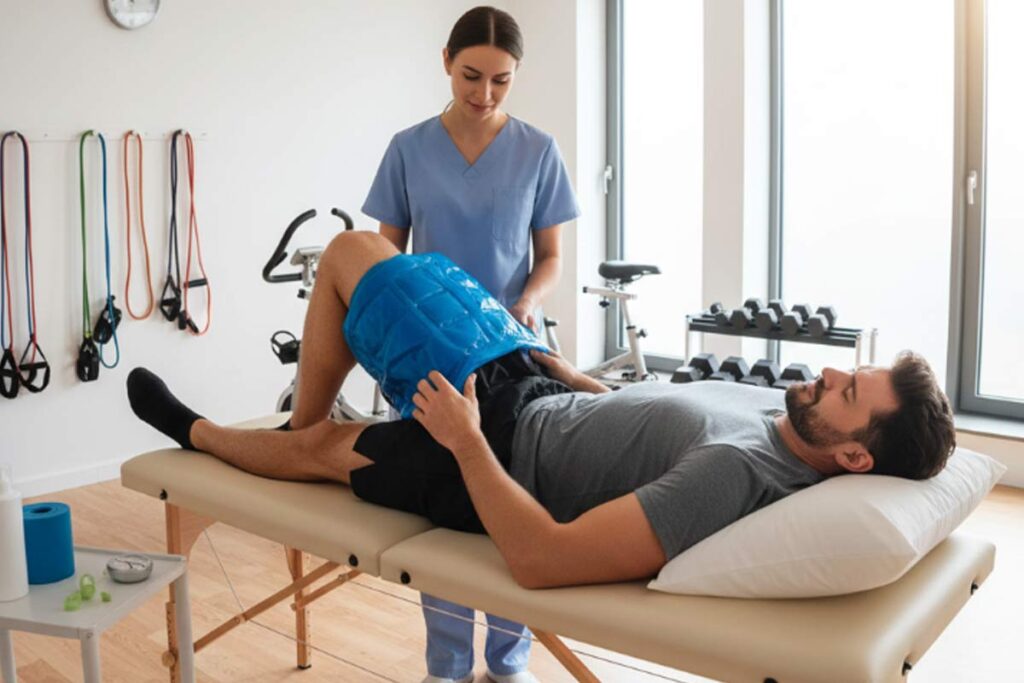
Acting quickly after a hamstring strain can significantly reduce the severity of the injury and speed up the initial healing process. The goal is to control swelling and pain and protect the injured muscle from further damage.
- Protect the Muscle: Stop the activity immediately. Continuing to push through the pain will only worsen the injury. Avoid any movements that cause pain. Using crutches may be necessary to keep weight off the leg if walking is difficult.
- Rest: The R in the RICE protocol (Rest, Ice, Compression, Elevation) is the most critical step. Resting the injured leg for the first 24 to 48 hours allows the body to begin its natural healing processes. This means avoiding physical activity and putting minimal weight on the leg.
- Ice: Wrap a cold pack or ice in a towel and apply it to the wounded region for 15-20 minutes every two to three hours. This aids in blood vessel constriction, which lessens swelling and numbs the area, relieving discomfort. Never apply ice directly to the skin.
- Compression: Gently wrap the strained area with a compression bandage. This can help prevent excessive swelling. The bandage should be snug but not so tight that it causes numbness, tingling, or increased pain. Remove the bandage before sleeping.
- Elevation: Whenever possible, elevate the leg above the level of your heart. This uses gravity to assist in draining excess fluid from the injury site, further reducing swelling. You can do this by propping your leg up with pillows while lying down.
- Consult a Physiotherapist: Seeking professional advice is a wise move. A qualified physiotherapist can accurately diagnose the severity of the strain and create a tailored rehabilitation plan. They can provide valuable guidance on when to start gentle movement and when to progress to more strenuous activities. In Canada, physiotherapists are regulated healthcare professionals.
The Recovery Phase
Once the initial inflammatory phase has passed (typically after 24-48 hours), the focus shifts to restoring function and strength.
-
- Gentle Stretching: After the initial period of rest, begin with very gentle, pain-free stretching. These movements should not cause discomfort. A simple stretch involves lying on your back and gently lifting the injured leg until you feel a light stretch. Hold for a short period and release.
- Progressive Strengthening: Strength training is a crucial component of recovery. Start with isometric exercises where the muscle is contracted without moving the joint, such as pressing your heel into the floor. As pain subsides, progress to light resistance exercises using a resistance band or bodyweight.
- Eccentric Loading: Eccentric exercises, where the muscle lengthens while contracting, are particularly effective for hamstring rehabilitation. The Nordic hamstring curl is a classic example. Begin this exercise slowly and with a controlled range of motion, as it can be challenging.
- Return to Activity: This is a phased process, not a single event. Start with low-impact activities like walking and swimming. Gradually introduce jogging and light running drills. Only return to full-speed running and sports when you can perform these movements without pain.
- Canadian Statistics: According to a study in the Journal of the Canadian Chiropractic Association, a significant portion of sports injuries are muscle strains, with hamstring strains being particularly common in sports like soccer. This highlights the importance of a structured and gradual return-to-play strategy to avoid repeat injuries.
- Listen to Your Body: Pain is an indicator that you are pushing too hard. If an exercise causes a sharp, shooting pain, stop immediately. It’s better to progress slowly and safely than to rush the process and risk a setback.
Prevention is Key: How to Avoid Re-Injury
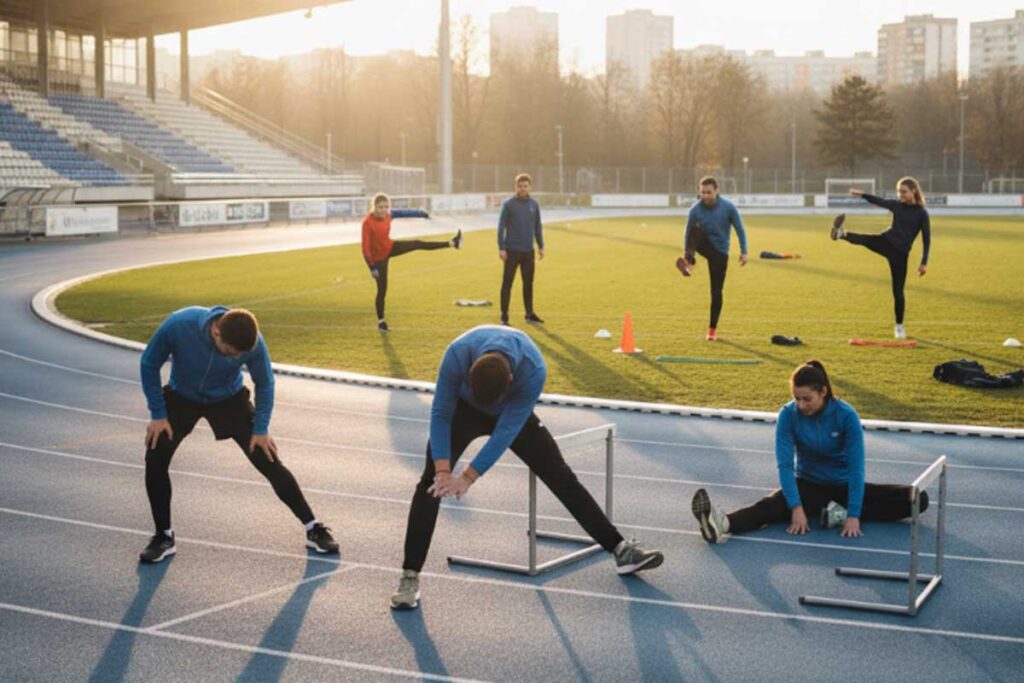
Preventing a recurrence of a hamstring strain is arguably the most important part of the entire recovery process. The risk of re-injury is high if proper preventative measures are not taken.
- Proper Warm-Up: Before any physical activity, perform a dynamic warm-up. This includes activities like leg swings, butt kicks, and walking lunges. Dynamic movements prepare the muscles for activity by increasing blood flow and muscle temperature.
- Cool-Down and Stretching: After exercise, a cool-down routine that includes static stretching helps to improve muscle flexibility. Hold each stretch for 20-30 seconds. This helps to reduce muscle soreness and maintain flexibility.
- Balanced Strength Training: Incorporate exercises that strengthen both the hamstrings and the quadriceps. This helps to correct muscle imbalances. Glute bridges, squats, and lunges are all effective exercises for this purpose.
- Adequate Recovery: Allow your body sufficient time to recover between workouts or training sessions. Overtraining can lead to muscle fatigue, increasing the risk of injury.
- Technique and Form: Work with a coach or physiotherapist to ensure your movement patterns, especially for activities like running, are correct. Correcting poor form can reduce the strain on your hamstrings.
Successfully recovering from a hamstring strain involves a clear and structured approach. By following the immediate action plan, a structured recovery protocol, and implementing preventative strategies, you can safely return to your favourite activities and reduce the risk of future strains.
For individuals in Ontario seeking assistance with managing and recovering from hamstring strains, PARC Ontario provides professional rehabilitation services. Contact our various locations at (416) 445-2075 or (416) 430-0314 [Scarborough], (905) 897-2092 [Mississauga], (905) 686-9081 [Ajax], (905) 430-2112 [Whitby], and (905) 579-9938 [Oshawa].